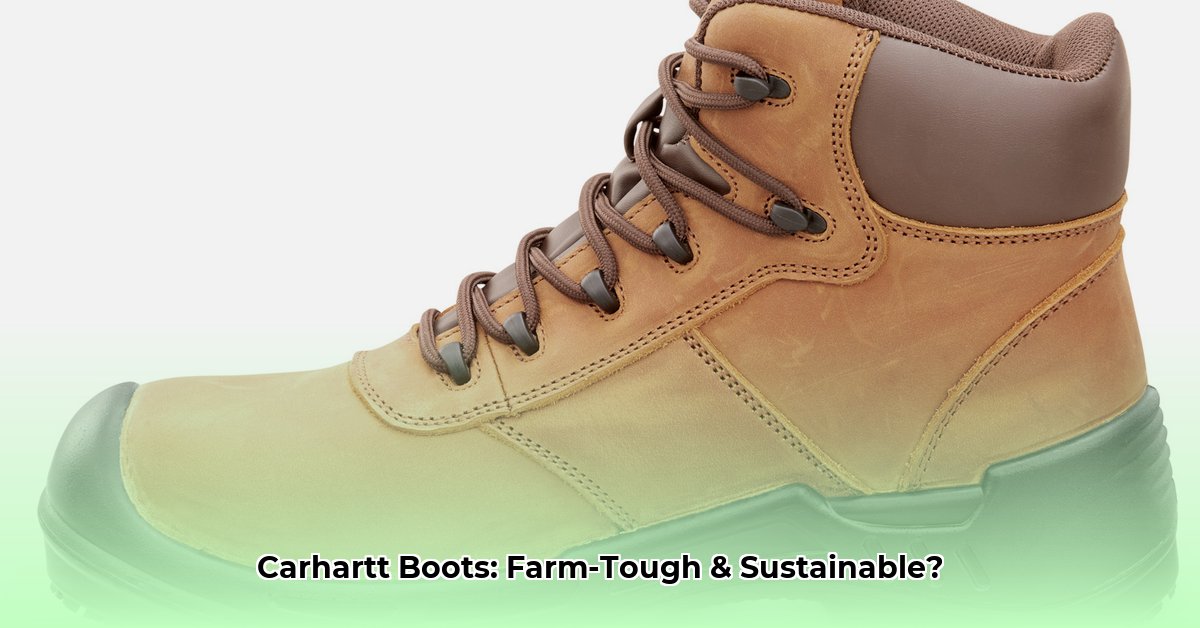
Carhartt Rugged Flex Boots: A Review Focused on Durability and Sustainability in Agriculture
Farmers need durable, protective footwear, and Carhartt boots are a popular choice. But today's consumers also prioritize environmental responsibility. This review assesses the Tractor Supply Carhartt Rugged Flex boots, examining their performance in agricultural settings and critically evaluating their sustainability. For more on Tractor Supply employment, see this page.
Performance: Durability and Protection
The Carhartt Rugged Flex boots are undeniably robust. User reviews consistently praise their durability, highlighting their ability to withstand harsh conditions and protect feet from workplace hazards. Features like waterproof linings, reinforced toes, and metatarsal guards contribute to their protective capabilities. These boots are built to last, offering reliable performance in demanding agricultural environments. But do these performance benefits come at an environmental cost?
Sustainability: A Lack of Transparency
This is where the picture becomes less clear. Carhartt lacks transparency regarding the sustainability of their Rugged Flex boots. Crucially, they do not publicly disclose details about material sourcing (leather type, rubber source), manufacturing processes (energy use, carbon footprint), or end-of-life management (recyclability, repairability). This lack of information significantly hinders the assessment of their overall environmental impact. This raises concerns for conscientious consumers seeking environmentally responsible options. Is this lack of information a deliberate choice or an oversight limiting potential market share?
Comparing to Competitors: A Sustainability Scorecard
To provide context, we compared the Carhartt Rugged Flex boots to competitor work boots known for their sustainability efforts. While specific brand names are omitted to avoid bias, the following table illustrates the key differences:
| Feature | Tractor Supply Carhartt Boots | Competitor A | Competitor B |
|---|---|---|---|
| Primary Materials | Leather, Rubber (Unspecified) | Recycled Rubber, Organic Cotton | Plant-based Leather, Recycled Rubber |
| Manufacturing Transparency | Low | High | High |
| Manufacturing Processes | Unknown | Low-Carbon Footprint | Fair Trade Certified |
| Recyclability | Unknown | Recyclable | Recyclable |
| Price Range | Moderate | Typically Higher | Typically Higher |
This comparison highlights that several competitors are significantly more transparent about their sustainability practices. This transparency allows consumers to make informed choices aligned with their values. Does Carhartt's lack of transparency reflect a lack of commitment to sustainability or a strategic decision?
Recommendations for Carhartt and the Industry
Carhartt should address this transparency gap immediately. Conducting a Life Cycle Assessment (LCA) would provide valuable data on the environmental impact of the boots. The company should also focus on using more sustainable materials, like recycled rubber or plant-based leather, and adopting energy-efficient manufacturing processes. The broader agricultural sector should also demand greater transparency from manufacturers to drive industry-wide change. This increased awareness could force a more responsible approach to manufacturing, ultimately benefiting both the environment and consumers. Wouldn’t more sustainable practices enhance brand reputation and market position?
Recommendations for Consumers: Demand Transparency
Consumers have significant influence. Before purchasing work boots, ask manufacturers direct questions about material sourcing, manufacturing processes, and end-of-life management. Support companies that prioritize transparency and sustainable practices. By demanding more information, consumers encourage manufacturers to improve their sustainability profile and make informed purchasing decisions. A simple question can make a difference. Does your purchasing power reflect your environmental values?
Conclusion: Performance vs. Planet
The Carhartt Rugged Flex boots excel in durability and protection. However, the lack of transparency regarding their sustainability raises critical questions. Consumers must carefully weigh the performance benefits against the unknown environmental consequences. Ultimately, choosing sustainable work boots requires careful research and a proactive approach to demanding transparency from manufacturers. The future of sustainable agriculture demands conscious choices from both producers and consumers.